
Meet the Super Plant Behind Cedar Gold
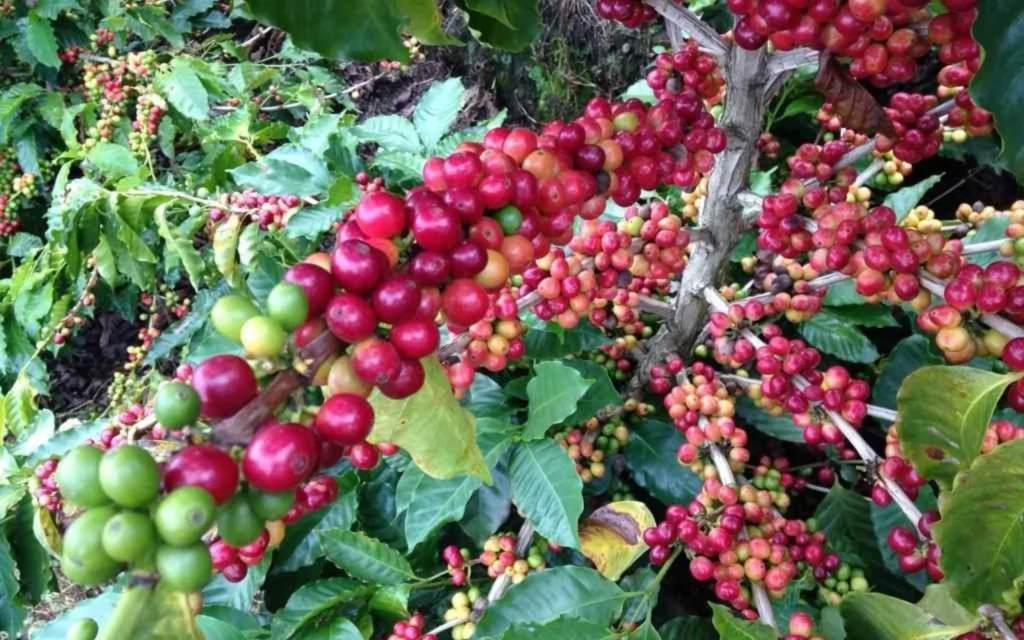
Cedar Gold is sweet, fruit-forward, chocolatey and remarkably smooth—but the story behind the coffee begins long before roasting. At the heart of this El Salvador lot is Centroamericano H1, a modern coffee variety created to bring together exceptional flavor, stronger plants and greater protection against coffee leaf rust.
A Better Coffee Plant—Without Sacrificing the Coffee
Coffee farmers have always had to balance two priorities: growing plants that can survive difficult conditions and producing coffee that tastes genuinely special. Historically, those goals did not always come together in the same plant.
Centroamericano H1 was developed to help change that. It is an F1 hybrid—a first-generation cross between two genetically distinct coffee parents—designed to combine the flavor potential of an Ethiopian landrace with the strength and disease resistance associated with the Sarchimor family.1
The result is a coffee plant known for high productivity, resistance to coffee leaf rust and excellent quality potential when grown in the right conditions.2
More Than Two Decades in the Making
Centroamericano H1 was not created overnight. The regional F1 hybrid breeding program behind it began in 1992 through a collaboration involving PROMECAFE, CATIE and the French agricultural research organization CIRAD.3
Researchers spent years crossing, testing and evaluating plants across Central America. Centroamericano was eventually released to farmers in 2010—roughly 18 years after the larger breeding program began.4
That long development process matters. Researchers were not simply looking for a plant that grew quickly. They were searching for a rare combination of cup quality, yield, vigor, adaptability and disease resistance.
The Parents Behind the Hybrid
One side of Centroamericano’s family tree is Rume Sudan, a wild Arabica variety originating in what is now South Sudan. Rume Sudan is admired for its delicate and unusual cup quality, but it is not generally known as a highly productive commercial plant.
The other parent is T5296, a Sarchimor—a group of coffees descended from a cross between the Arabica variety Villa Sarchi and the rust-resistant Timor Hybrid.
By bringing these genetic lines together, breeders sought to capture some of Rume Sudan’s flavor potential while gaining the productivity, vigor and disease resistance associated with the Sarchimor parent.
Why the Plants Are Reproduced Differently
Centroamericano H1 cannot simply be planted from ordinary seed with the expectation that every new plant will remain genetically identical. As an F1 hybrid, the next generation can separate into plants with different characteristics.
To preserve the intended combination of traits, H1 plants are commonly reproduced through controlled vegetative propagation, including laboratory-based tissue culture or rooted cuttings. In simple terms, growers reproduce the proven plant rather than rolling the genetic dice with every seed.
That process requires more specialized infrastructure than conventional seed production, but it helps farmers receive plants with consistent characteristics.
Does a Hybrid Coffee Still Taste Like Specialty Coffee?
Absolutely—and Centroamericano has the competition results to prove it.
In 2017, a Centroamericano lot placed second in Nicaragua’s Cup of Excellence with a score of 90.5 points.6 That is an extraordinary result for any coffee and an important reminder that disease resistance and high productivity do not automatically come at the expense of flavor.
Genetics, however, are only the beginning. Elevation, soil, shade, rainfall, harvesting, fermentation, drying, storage and roasting all help determine what ultimately reaches the cup.
What This Means for Cedar Gold
Cedar Gold gives us the opportunity to serve a coffee that is delicious now while also pointing toward a more resilient future for coffee farming.
Its Centroamericano H1 variety was created to help farmers produce more coffee from vigorous, rust-resistant plants without abandoning the flavor qualities that make specialty coffee worth seeking out.
In the cup, Cedar Gold brings that story home with a profile that is sweet, lively and comforting—fruit and chocolate working together, with enough character to keep each sip interesting.
It is science, farming and flavor meeting in one coffee. Around here, we simply call it Cedar Gold.


No Comments.