
“I’ll take the strongest coffee you have.”
It’s one of the things we hear most often behind the bar.
Usually, when we ask what they mean by “strong,” the answer is, “A dark roast.”
And that’s where one of coffee’s biggest misconceptions begins.
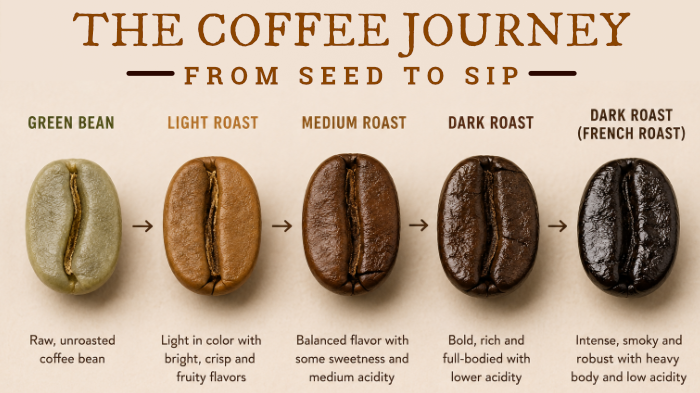
The truth is, light, medium, and dark roast don’t tell you how strong a coffee is—they tell you how the coffee was roasted. Each roast level brings out different qualities in the bean, and none is inherently “better” than the others. They’re simply different ways of enjoying the same incredible seed.
Let’s break it down.
First, Coffee Doesn’t Start Out Brown
This surprises a lot of people.
Coffee beans actually begin life as pale green seeds inside the fruit of a coffee tree. They’re grassy, dense, and don’t smell much like coffee at all.
It’s the roasting process that transforms those green beans into the rich, aromatic coffee we know and love. Heat unlocks hundreds of different flavor compounds, and the amount of time the beans spend in the roaster determines whether they’ll become a light, medium, or dark roast.
Think of it like baking bread. A lightly baked loaf tastes very different from one that’s been baked until it’s deeply browned. Neither is wrong—they’re just different expressions of the same ingredients.
If you’d like to learn more about coffee’s journey from seed to cup, the National Coffee Association has an excellent guide:
https://www.ncausa.org/About-Coffee
So… What Is a Light Roast?
Here’s where things get interesting.
A light roast spends less time in the roaster, which means more of the coffee’s natural character stays intact.
Instead of tasting the roast itself, you’re tasting where that coffee came from.
A light roast from Ethiopia might remind you of blueberries or peaches. One from Colombia may lean toward caramel and citrus. A coffee from Guatemala might bring notes of cocoa and orange.
No one is adding those flavors. That’s simply the magic of coffee.
It’s a little like wine. The vineyard matters. The climate matters. The soil matters. The farmer matters.
A light roast lets those things shine.
The specialty coffee world has spent decades helping consumers appreciate these unique characteristics. If you’re curious about how professionals evaluate coffee quality, the Specialty Coffee Association is a great place to explore:
https://sca.coffee
Medium Roast: The Best of Both Worlds
If light roast is about highlighting the bean’s origin, medium roast begins to add a little more influence from the roasting process itself.
You’ll usually find a little more body, more caramel sweetness, and flavors that many people describe as chocolatey, nutty, or balanced.
For many coffee drinkers, medium roast is the perfect middle ground. It still has plenty of personality without being quite as bright or acidic as a lighter roast.
It’s no coincidence that medium roast is one of the most popular styles in specialty coffee.
And Then There’s Dark Roast
Dark roast gets the reputation for being “strong,” but that’s mostly because its flavors are bigger and bolder.
As the beans spend more time roasting, the natural origin flavors take a back seat and the roast itself becomes the star.
You’ll notice richer chocolate notes, toasted nuts, smoky aromas, and a heavier body. It’s comforting, familiar, and exactly what many people crave first thing in the morning.
A well-crafted dark roast can be fantastic.
The key words there are well-crafted.
Dark doesn’t have to mean burnt.
Wait… Doesn’t Light Roast Have More Caffeine?
Here’s the part that usually surprises people.
Not really.
Despite what you’ve probably heard, the caffeine difference between light and dark roast is so small that most people would never notice it.
If you’re choosing a dark roast because you think it has less caffeine—or a light roast because you think it’ll wake you up more—you can stop worrying.
The roast level changes the flavor far more than it changes the caffeine.
Coffee Can Taste Like Blueberries… Really?
One of the most fun parts of specialty coffee is discovering that coffee can naturally taste like fruit, flowers, chocolate, or spices.
Those tasting notes aren’t added after roasting—they’re naturally present in the coffee and become more or less noticeable depending on the roast level and brewing method.
If you’ve never explored coffee tasting before, Coffee Review is an excellent resource for reading professional reviews of coffees from around the world:
https://www.coffeereview.com
So Which Roast Is Best?
Our favorite answer?
The one that makes you smile after the first sip.
Some mornings call for a bright, lively Ethiopian that tastes like summer fruit.
Other mornings call for a rich, chocolatey cup that feels like your favorite sweatshirt.
Neither is the “right” choice.
One of the things we love most about specialty coffee is that it gives us options. Coffee isn’t supposed to taste just one way. There are thousands of varieties, dozens of processing methods, countless growing regions, and an endless number of flavors waiting to be discovered.
That’s what keeps coffee exciting.
Our Advice? Stay Curious.
If you’ve always ordered dark roast, try a light roast sometime. You might be surprised by how naturally sweet and fruity coffee can be.
If you’ve always leaned toward lighter coffees, don’t overlook a thoughtfully roasted dark roast. When done well, it can be rich, smooth, and wonderfully comforting without tasting burnt.
Want to keep learning? Coffee educator James Hoffmann has created some of the best educational content available for curious coffee drinkers:
https://www.jameshoffmann.co.uk
And if you’re in North Jersey, stop by Cedar Bean’s Coffee Joint and ask what’s on brew. We love introducing people to coffees they might never have tried otherwise.
The fun of coffee isn’t finding the “best” roast.
It’s finding your roast.
And who knows? Your favorite cup next month might be completely different from your favorite cup today.
That’s part of the adventure.
We’ll be here to help you discover it.


No Comments.